To-Do list
Sep 11, 2026
Still open: the actual cabinet, the platform mechanism, the apron rule card, and the next pass on screen graphics. The ROM side is basically waiting on hardware now.
Projects » NES Pinball Cabinet
| Status | Paused |
|---|---|
| Started | Aug 22, 2026 |
| Last update | Sep 11, 2026 |
| Updates | 15 |
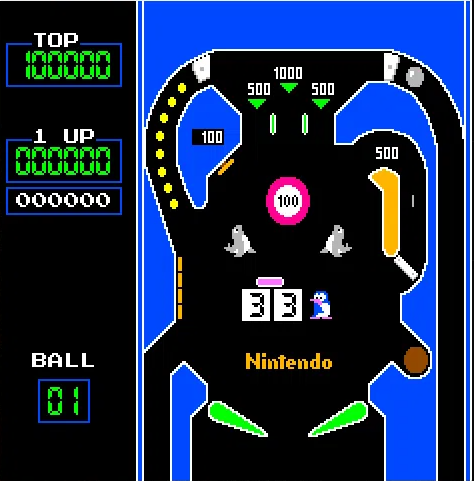
Real cabinet conversion of "Pinball" for NES and VS System.
Still open: the actual cabinet, the platform mechanism, the apron rule card, and the next pass on screen graphics. The ROM side is basically waiting on hardware now.
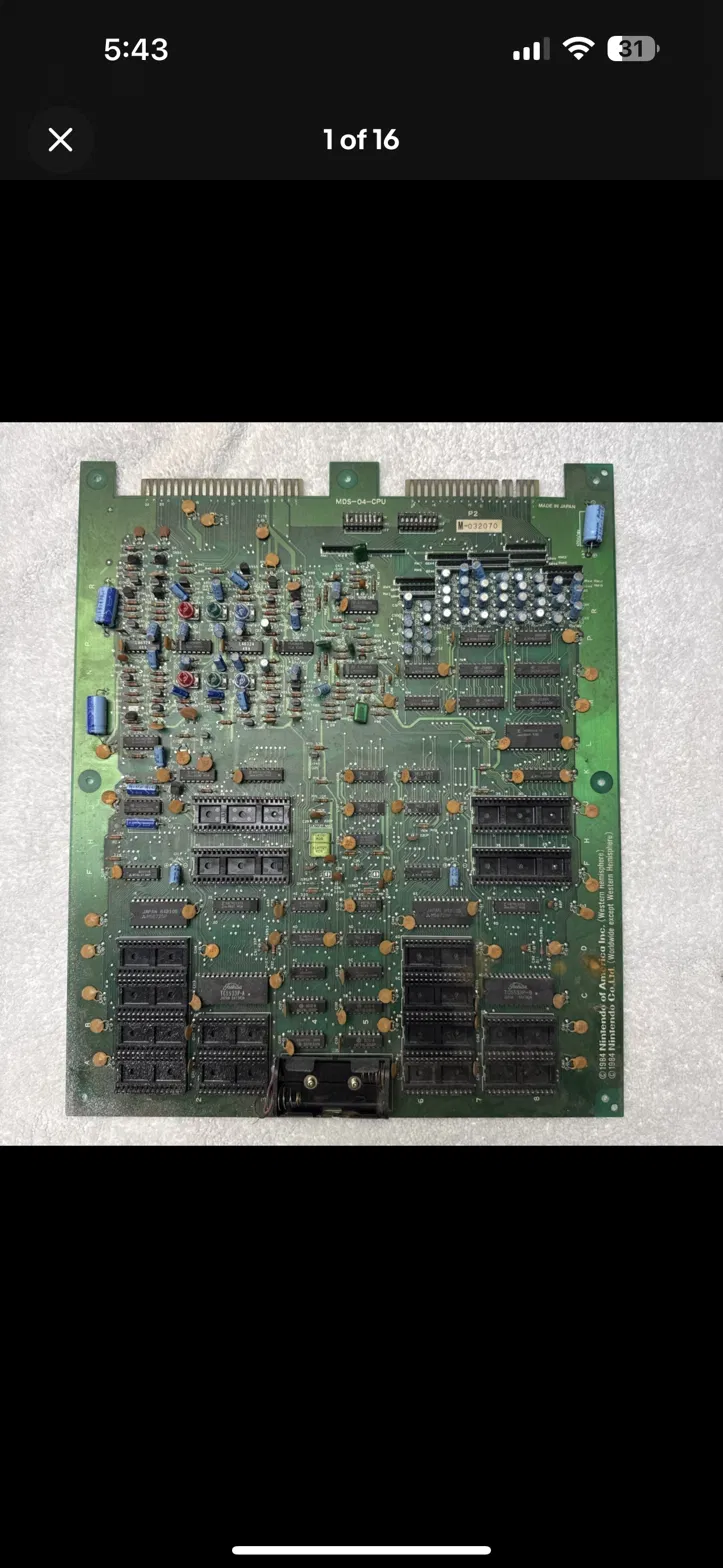
A VS. System motherboard came up for sale, so I looked at going full arcade hardware. It was bare, though: no CPU, no graphics chip, no harness, no power supply. The arcade graphics chip is the hard part to find, and it got expensive fast.
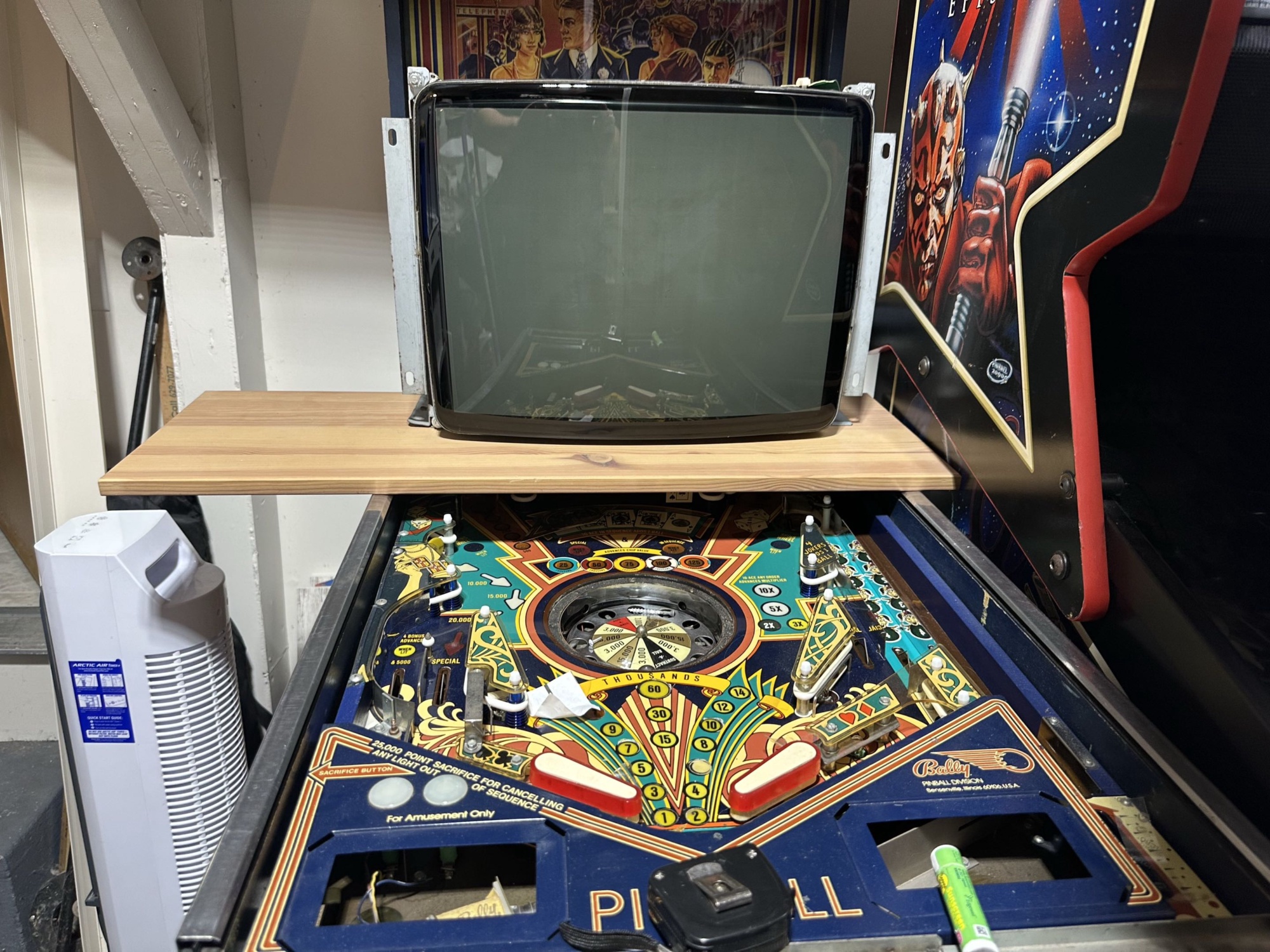
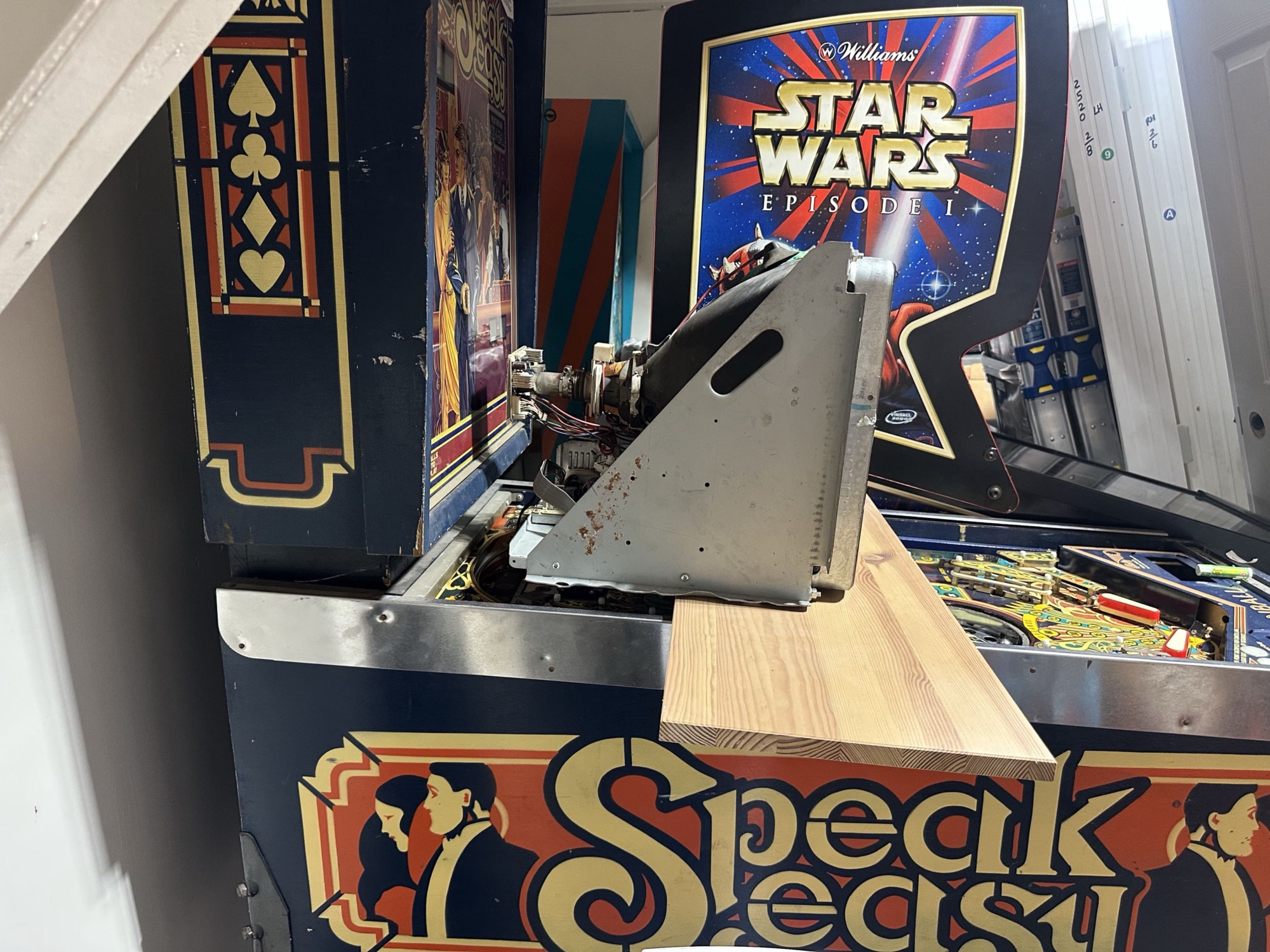
So the NES is locked in: a front-loader NES-001 affixed in the backbox (and optionally the original shell as a topper on the backbox, maybe make the power and reset buttons functional?) with an RGB mod running into a reclaimed Kortek KT-2101N arcade monitor. An RGB board can load the real arcade colors, so it still looks right. Real VS. hardware might be a follow-up project.
The custom cart is specced too: 32 KB program, four graphics banks, 8 KB battery-backed RAM, and the I/O for switches, lamps and coils. A flat cable runs out of the cart to the driver board.
The biggest bug so far, found by accident during a lamp check.
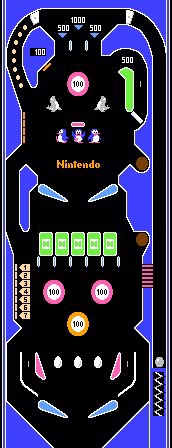
The original splits the table into an upper and a lower screen and only runs the half the ball is on. On the cabinet the video ball is parked on the lower half, so the upper half never ran. No slot machine, no moving platform, no multiplier. It had been that way since M4.
On the cabinet it's all one playfield, and the platform keeps moving the whole game. So now both halves run every frame. The slot reels spin, and three of a kind pays out on the cabinet for the first time. That matters, since it's a big part of the game's loop.
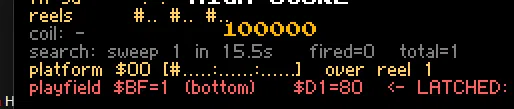
Holding a flipper pauses the search. Cradling the ball isn't a stuck ball. How long a hold is allowed is still to be decided. Maybe change skipping to next ball to just providing another ball to the player while keeping it on the current ball count?
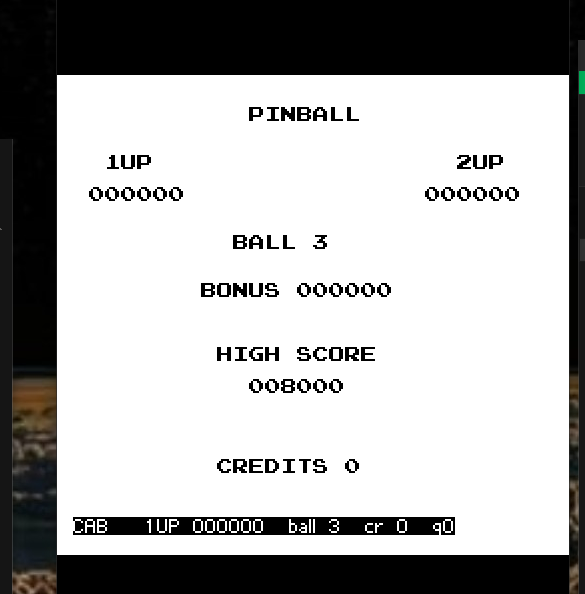
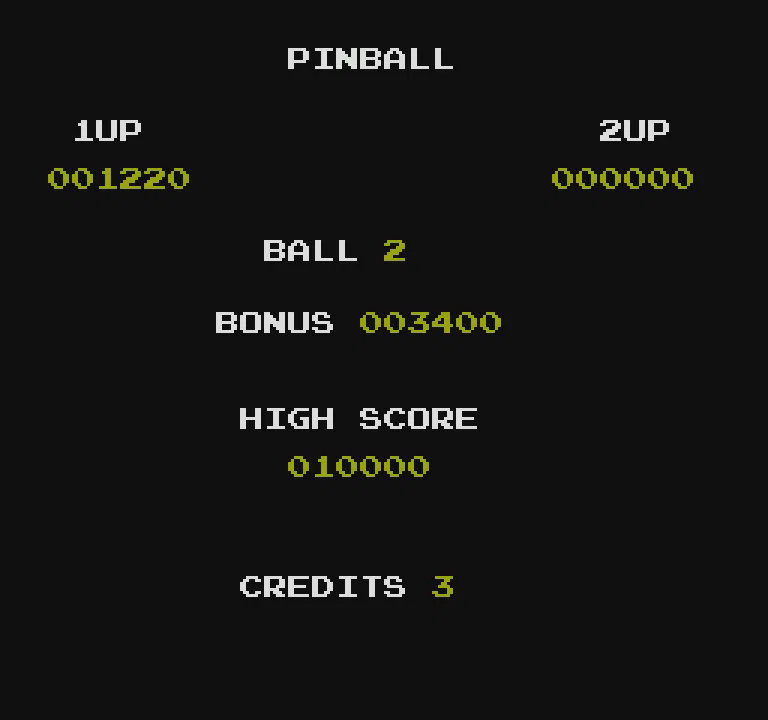
The score screen was plain white text. I picked a layout:
Next: even bigger digits, and maybe a more backbox-like frame around it.

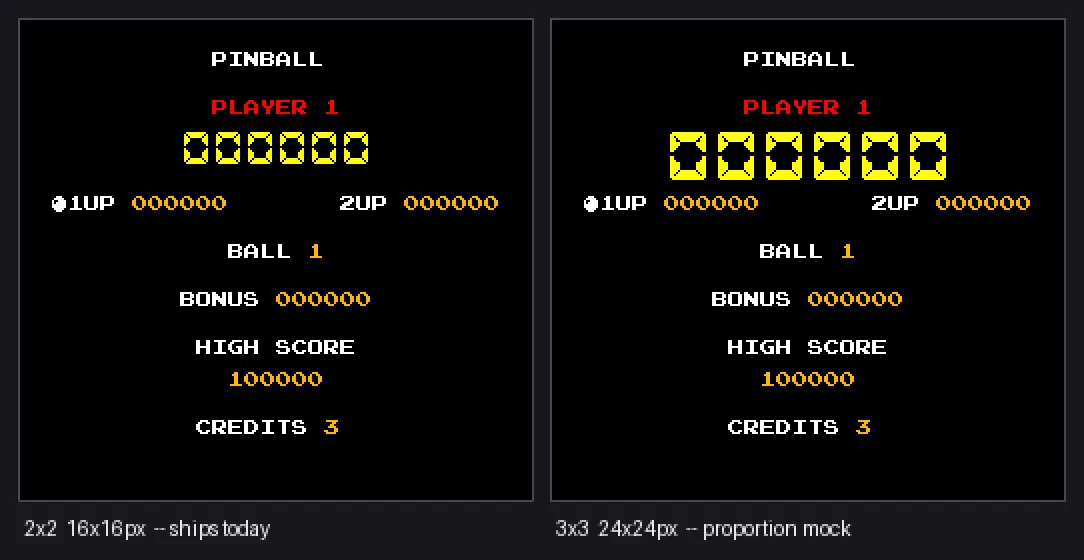
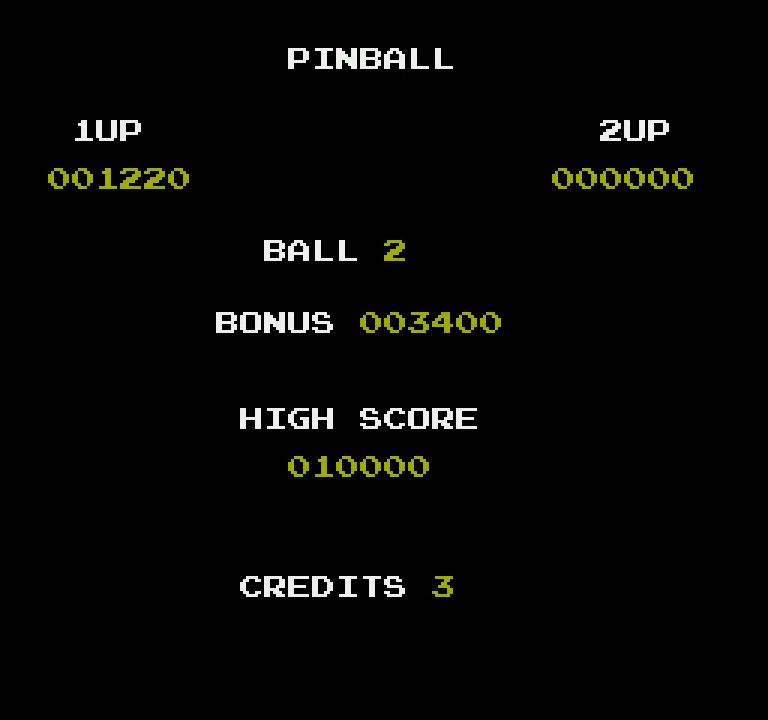
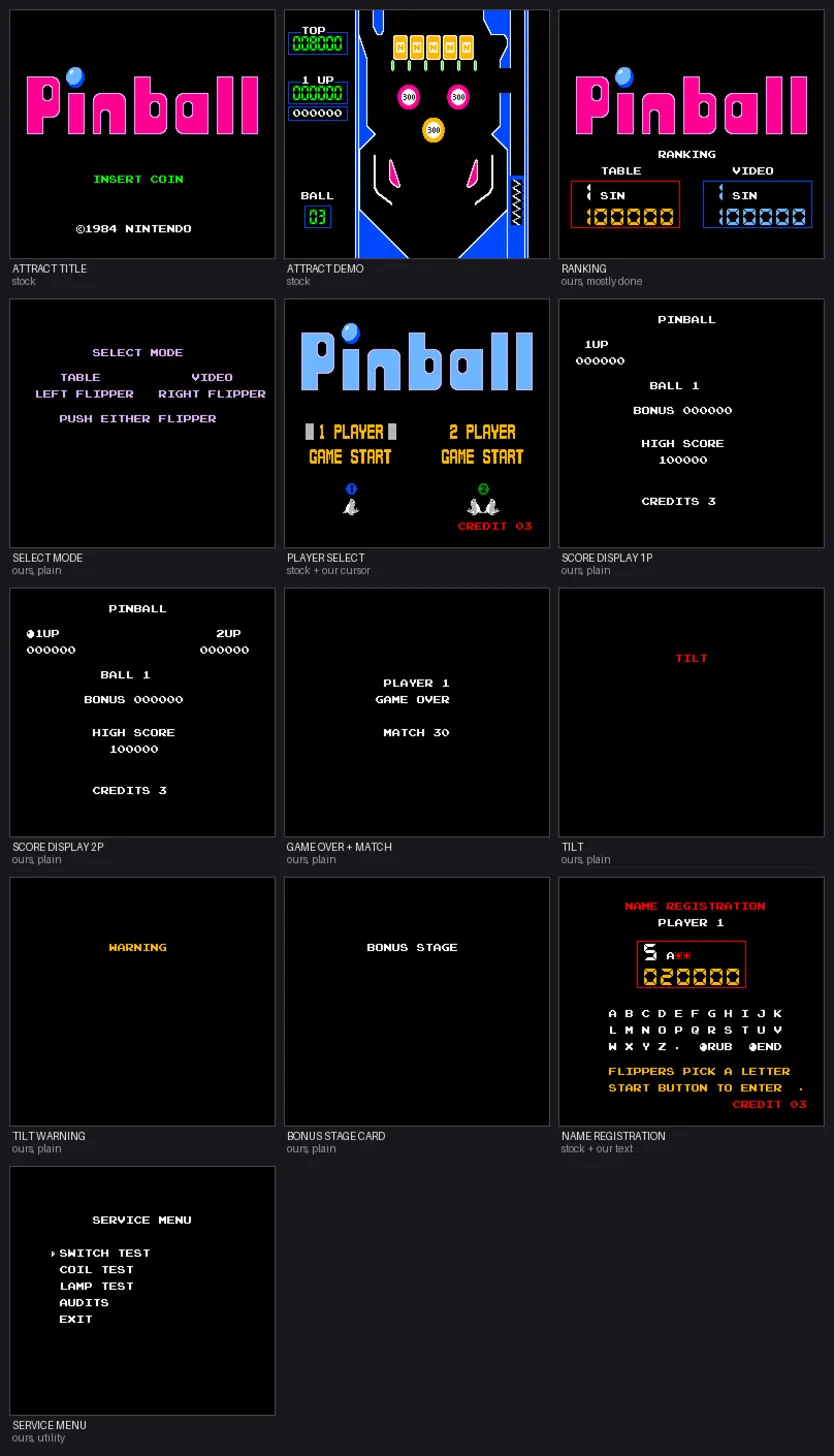
In TABLE mode the CRT shows what a backbox shows instead of the playfield: PINBALL, 1UP/2UP, BALL, BONUS, HIGH SCORE and CREDITS.
This one took 32 test builds. Code that looked like "just drawing" was also running timers and building collision maps, and the game kept freezing in new ways. I tracked one down by testing old builds by hand ("fine in v3, present in v7").
The screen also came up inverted, white with black text. The arcade's colors are numbered differently from a normal NES. I caught it from a photo.
Rules added along the way:
Fun one from M7: the letter I in the game's font isn't where you'd expect. The tile that looks like it should be I is a second E. Using it would have printed "REAL PEN."
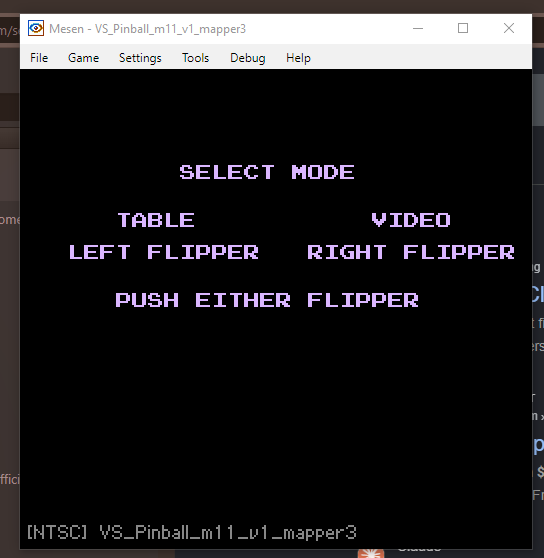
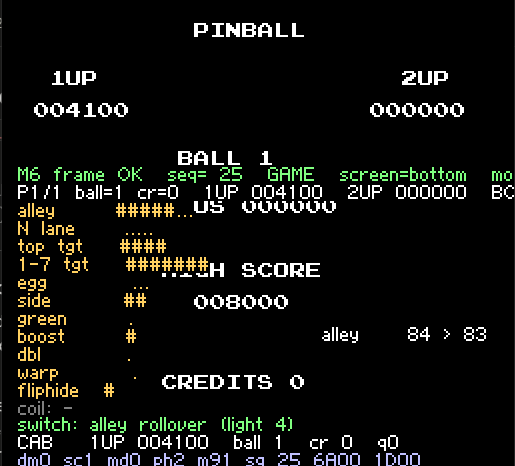
M4: the rules now run entirely from a queue of switch hits on the cart. Press a key in the emulator and the game scores it, with no ball on screen. Getting there meant fixing random power-on memory that looked like real switch hits and fired events from boot.
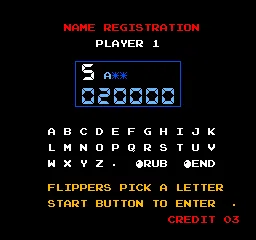
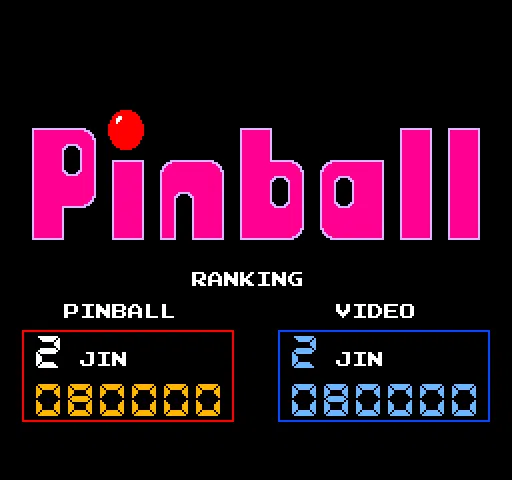
M5: two ways to play.
Each mode keeps its own high scores.
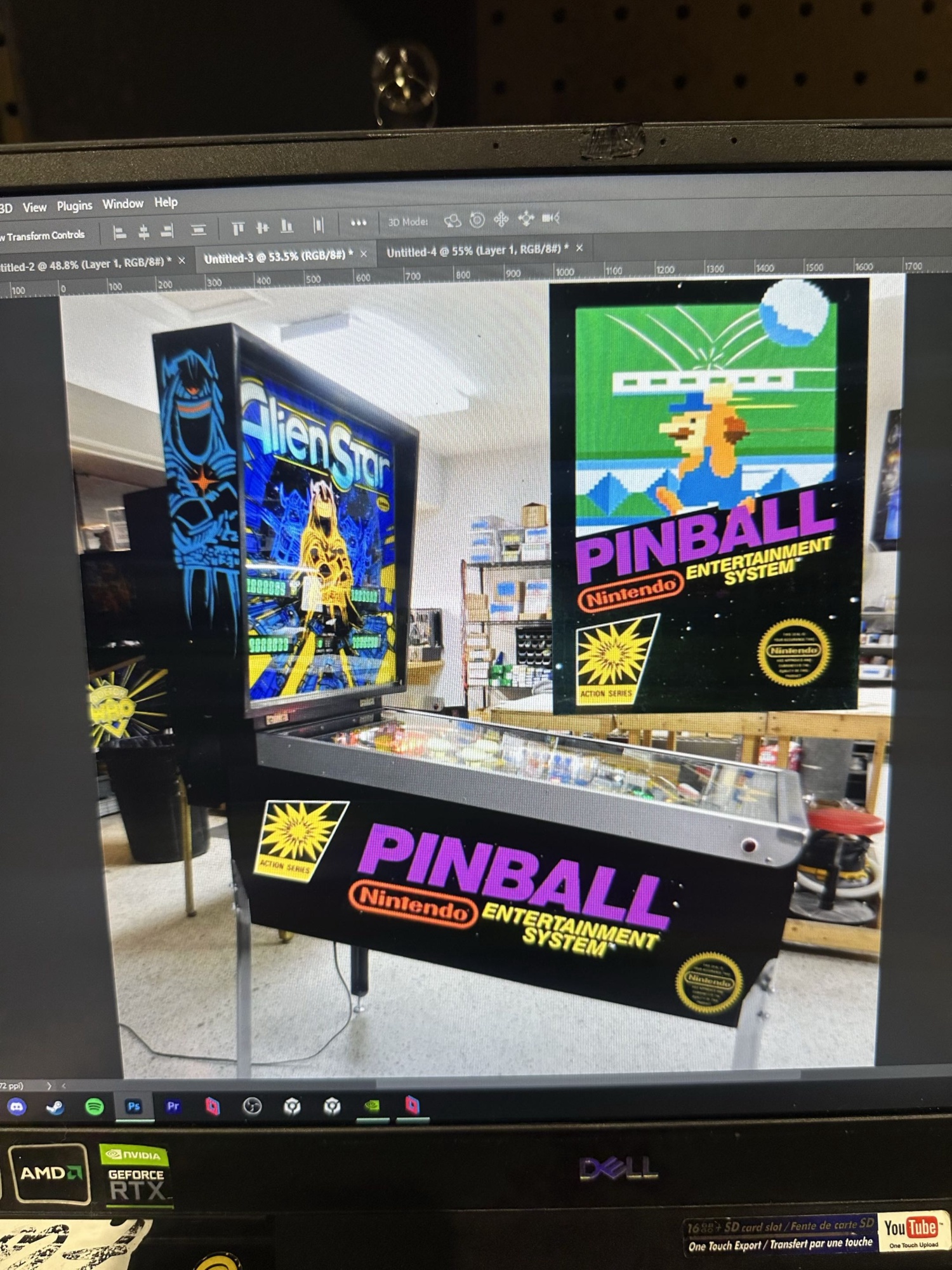
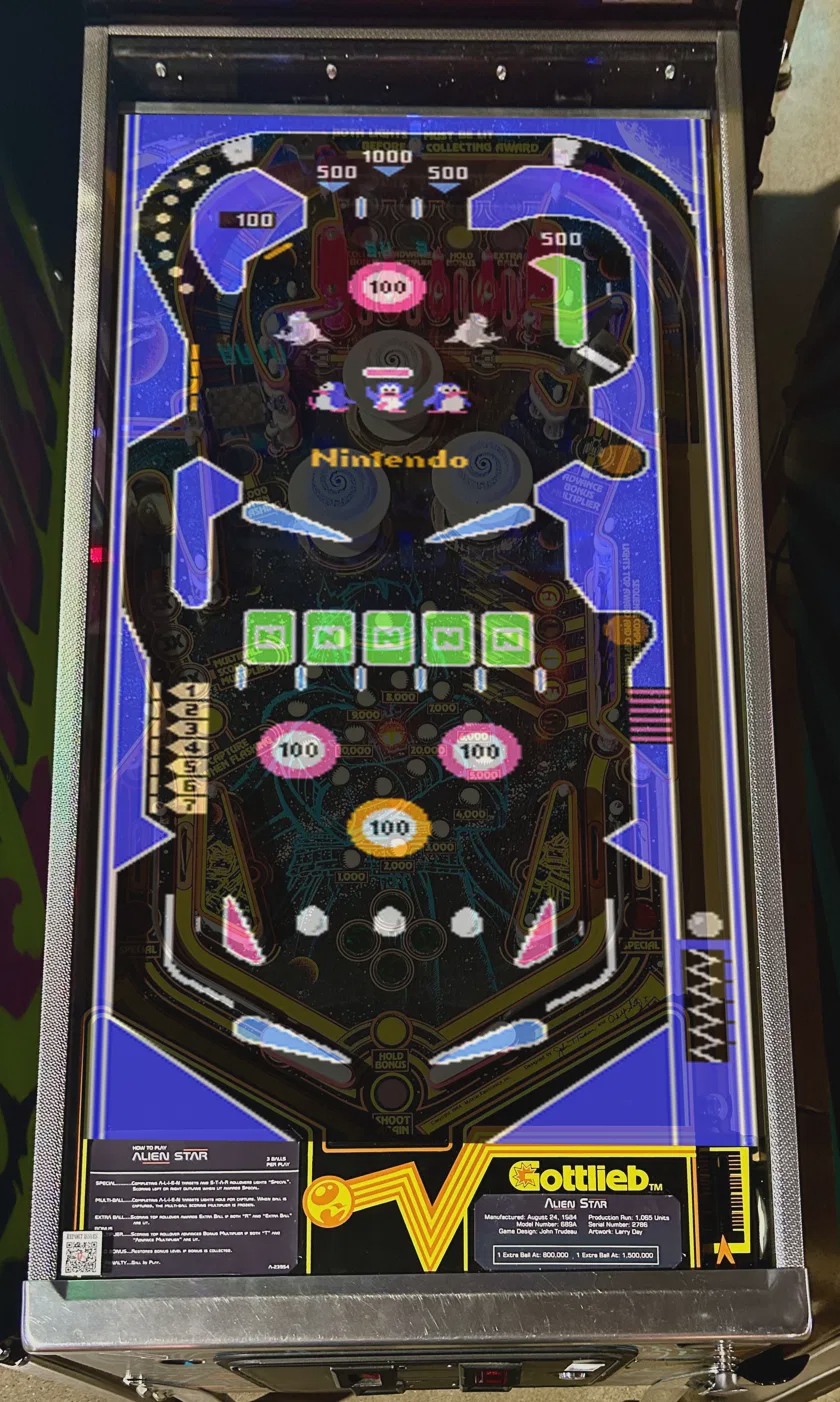
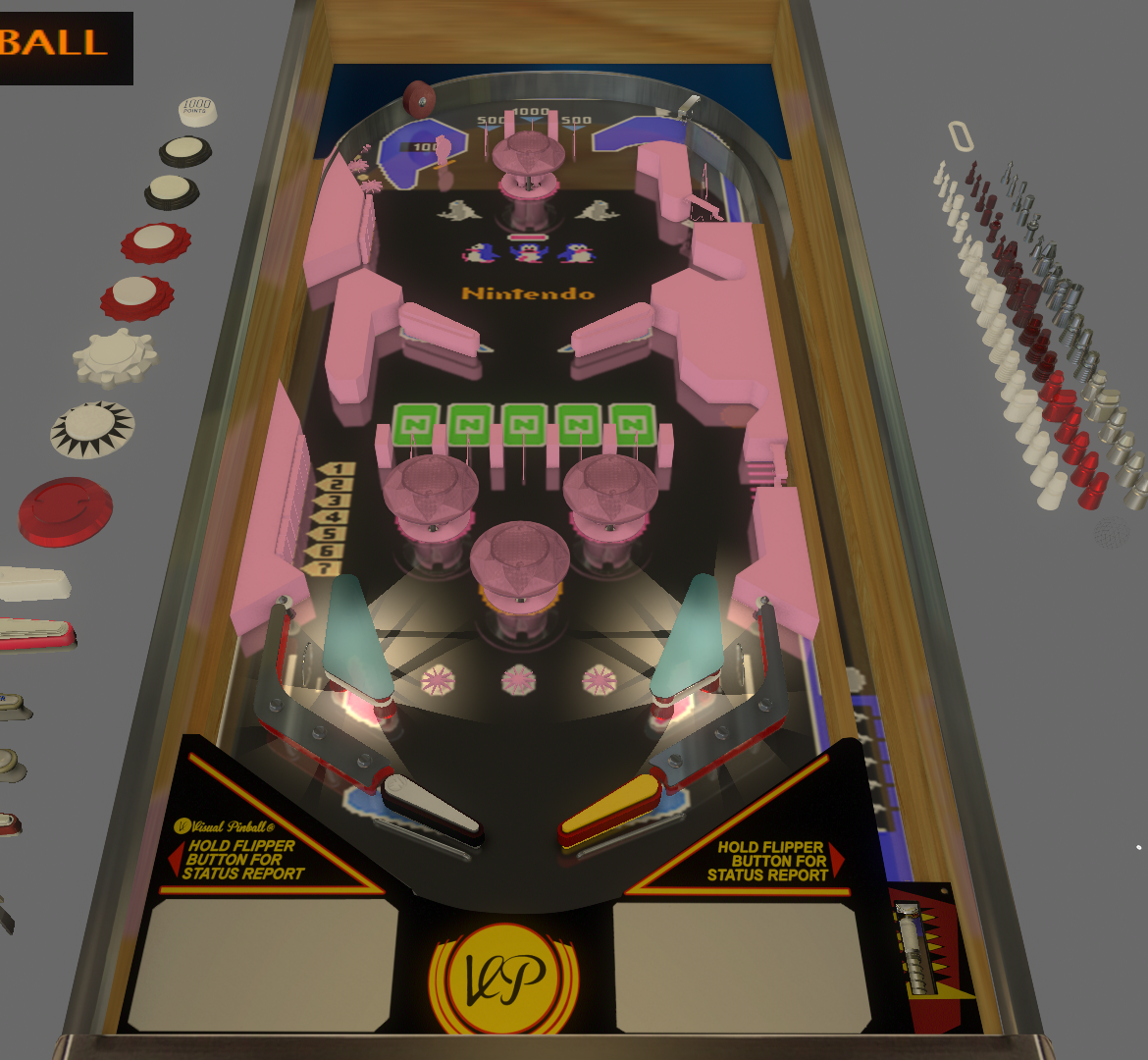
Between getting the ROM sorted out and prepped for real hardware, I started to work on how the actual layout would lay on a standard pinball playfield size. I started this by doing several photoshop mockups of the full size playfield from the game scaled and layed on top of a normal era-appropriate playfield (specifically using 1984's Alien Star by Gottlieb). From there I started to learn the basics of Visual Pinball using this great Visual Pinball crash course by DEAD FLIP. It may not look pretty with the standard bright pink colors the program uses, but a start is a start!
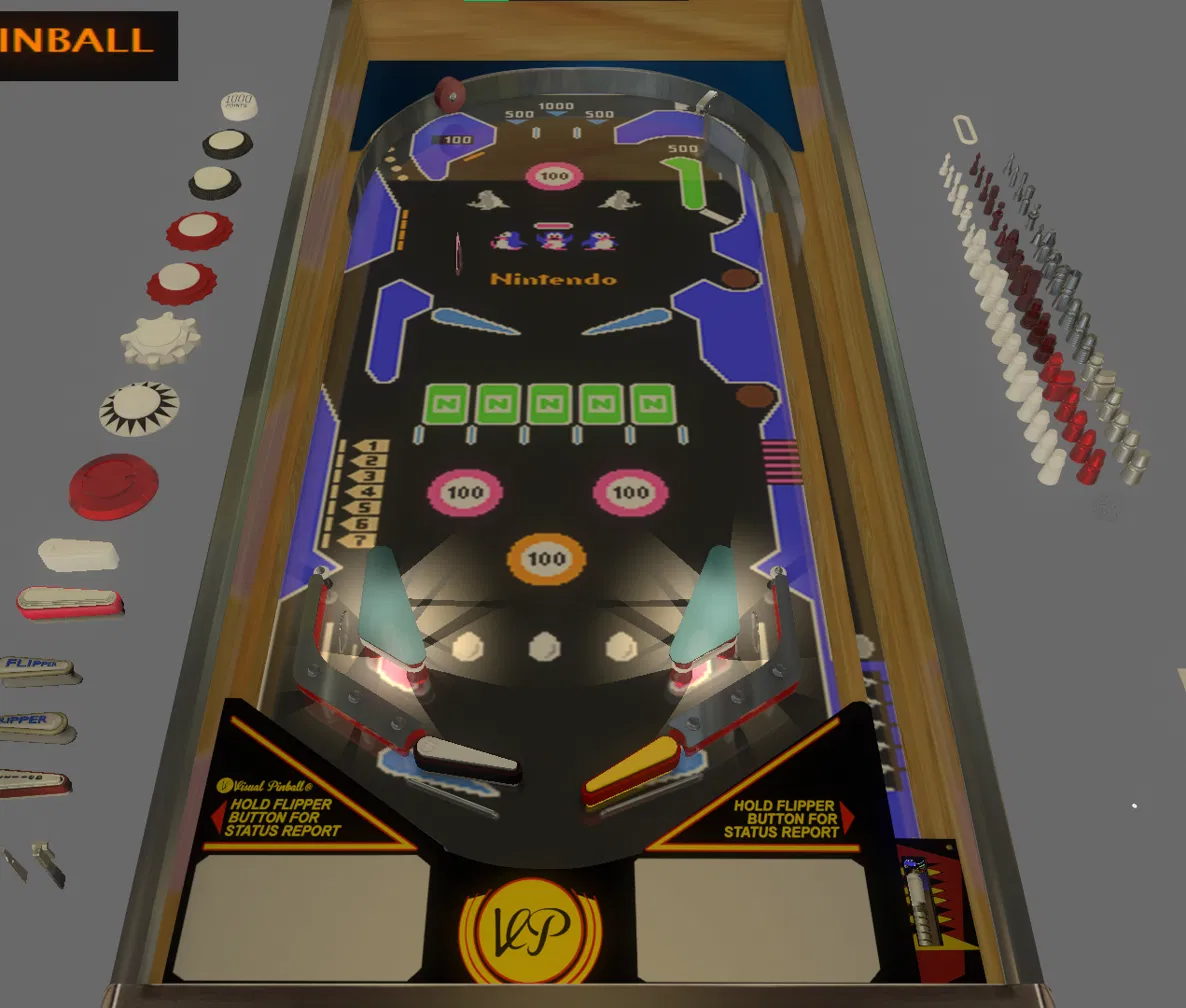
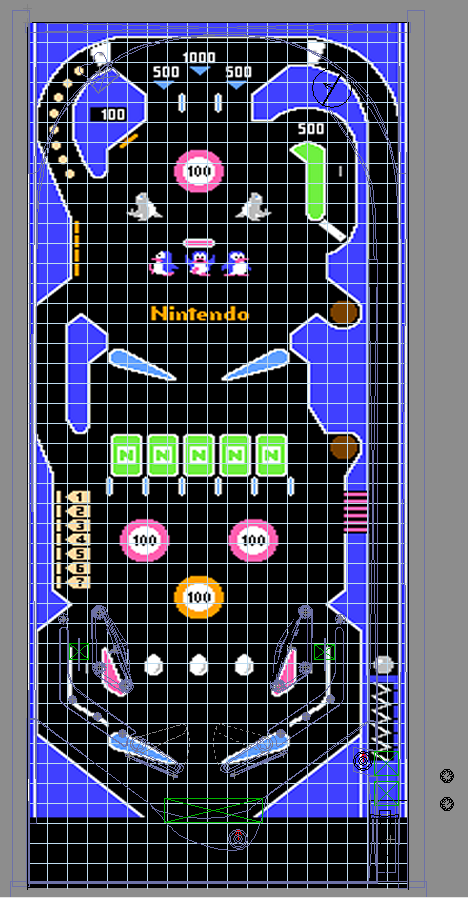
I switched the base ROM from the home cart to VS. Pinball, the arcade version for Nintendo's VS. System.
This decision was made for a few reasons:
It runs on NES hardware with a few small changes, since the VS. System uses the same chips wired a little differently.
The theme changed too. "NES-themed pinball" became "what if Nintendo had built a pinball machine in the mid-80s?" The look comes from their arcade cabinets of that time: PlayChoice-10, Punch-Out!! and the VS. System.
First boots were a mess. Right title and garbled playfield, or the other way round. The emulator recognizes the original ROM and quietly fixes its settings, but change one byte and it stops recognizing it. Every build now describes itself fully in its header.
Some VS. Pinball screenshots have a pink title logo instead of blue. I like pink, so that's what this machine gets.
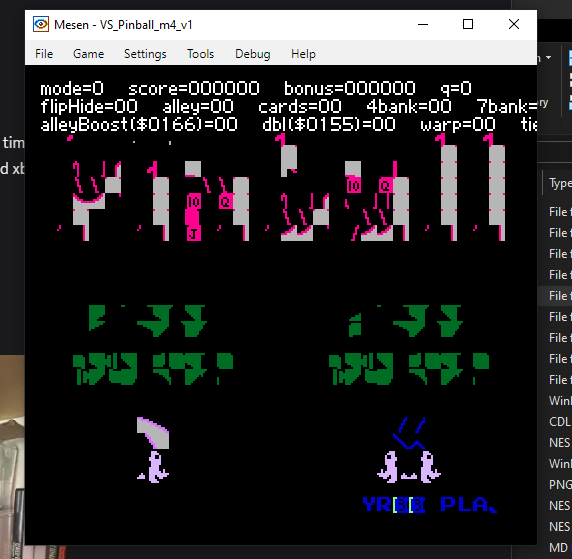
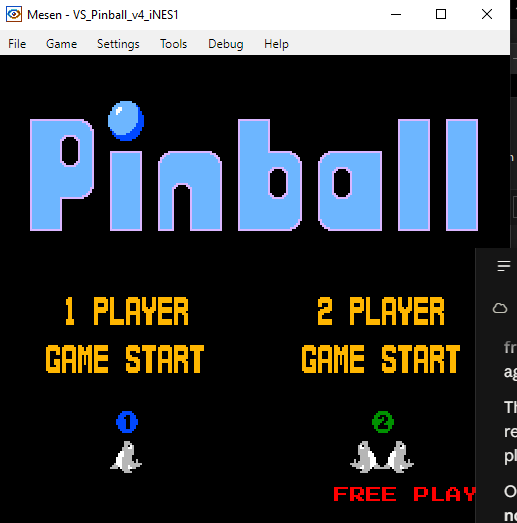
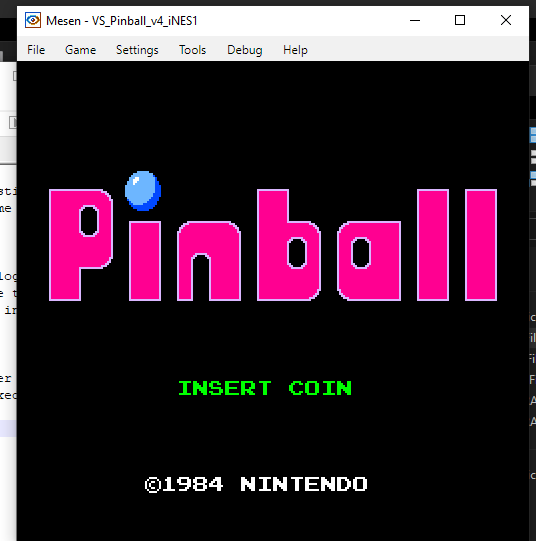
The ROM was the make-or-break part, so it came first. Pinball seemed fairly simple compared to other NES games.
So the plan holds: keep the sound, score display, art and bonus stage, and make the rules react to real switches instead of the video ball.
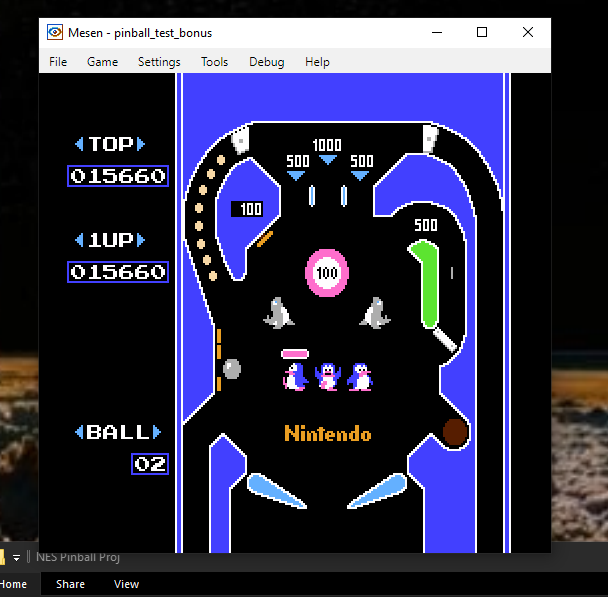
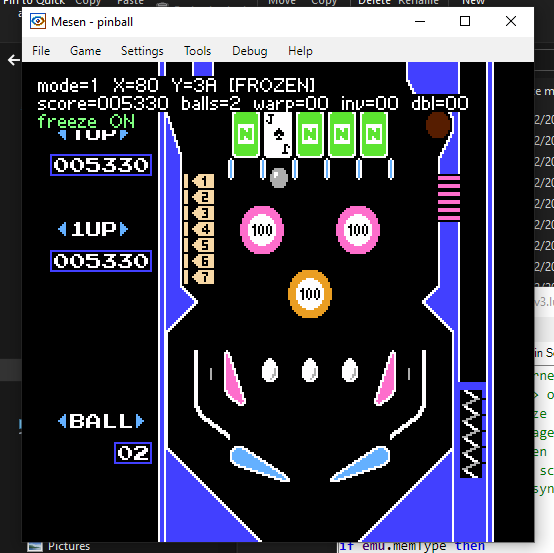
Most of the first day went to ruling out bad ideas before they cost anything.
As the title says, this is a project designed to be a "what-if" scenario where Nintendo made their game Pinball for NES as an actual pinball machine. I plan on using a real NES as the brains of the cabinet, both for convenience and ease of access but also because it allows it to stay semi true to Nintendo's real arcade hardware as the NES and their arcade boards are similar if not near identical when it comes to power and functionality. This also allows me to use the original Pinball ROM as a base for scoring and switch events utilizing a custom harness either into a dedicated cartridge or the NES's expansion port.
There will be a CRT in the backbox acting as your score field and as a display for the Mario breakout style minigame, which I plan to keep fully functional. With this, I'm also able to allow play of not only the physical playfield like any normal pinball machine, but also the ability to play the original Pinball ROM on the display by using the flipper buttons as controls. I also would like to add in a top 5 leaderboard that's separated from the physical pin and the virtual pin.
***The software side of this project heavily utilizes Claude Opus 5.5. I am not a coder and I have no interest in learning reverse engineering, ROM modification, or custom software. All artistic designs, layout, build plans, and artwork is done by hand and has no influence or decisions made by Claude. This is just a fun project for me to work on, no monetary bennefits are to be had***